free html5 templates

CLINICAL CASES - C

ZERAMEX® XT | All on 8 - Fixed Md Prosthesis

Courtesy Dr. Michael Leistner  |      [email protected]       |       http://www.dent-design.de

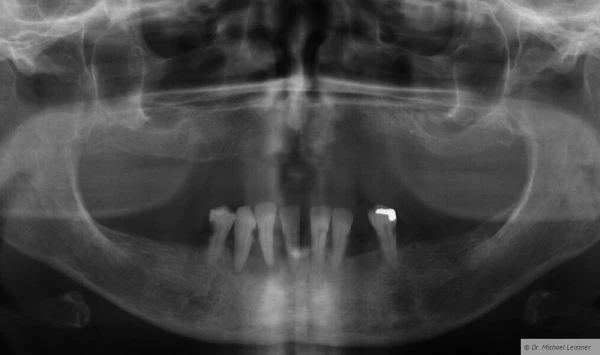
The 64-year-old patient presented in the practice for the new restoration of the lower jaw. The remaining teeth in the lower jaw were no longer suitable for a prosthetic solution. The roots of the teeth were only a few millimeters in the bone, all teeth were mobile (degrees of mobility from I to III). Dr. Leistner proposed a hybrid on four Zeramex XT implants and locators, or a fixed prosthesis on eight Zeramex XT  implants.

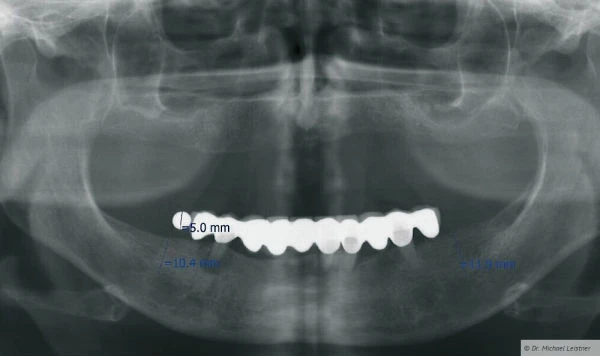
After this discussion, the patient did not come back for two years. She then came back with big problems. Another colleague had incorporated a ten units bridge construction on four of the previously existing seven teeth. The entire bridge was mobile and the patient was unable to eat solid food without causing severe pain. At that point the patient had already decided to go for a fixed restoration on eight implants, as per the initial recommendation, two years earlier. 

The fact that it was possible to use a 100% metal-free solution was also very appealing.
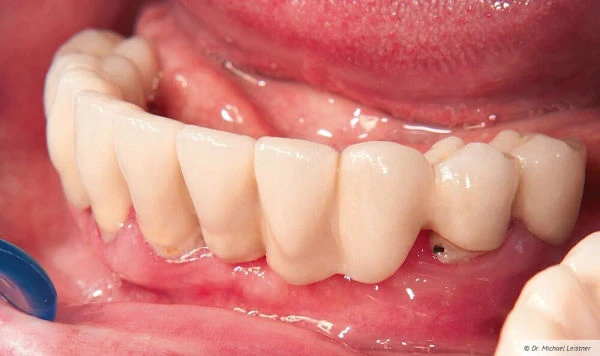
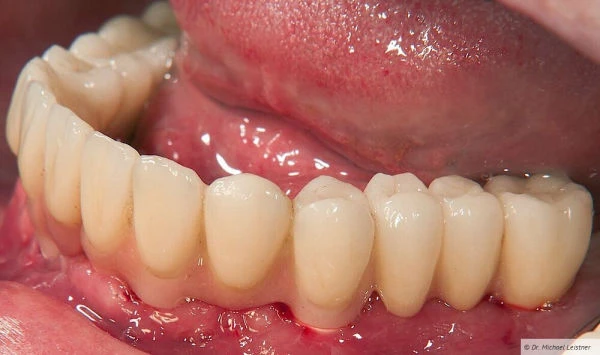
1- Left view of the bridges after cleaning the cement residues.
2- OPG at first presentation of the patient.
3- 10-unit bridge on four teeth placed by another dentist following the initial patient visit
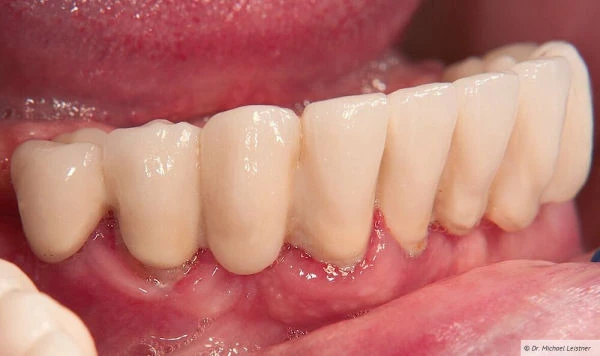
4- Lateral view of the 10-unit bridge.
5-Lateral view of the 10-unit bridge.
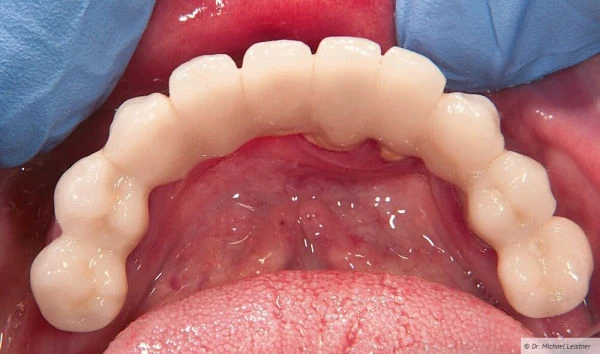
6- Occlusal, incisal view of the 10-unit bridge.
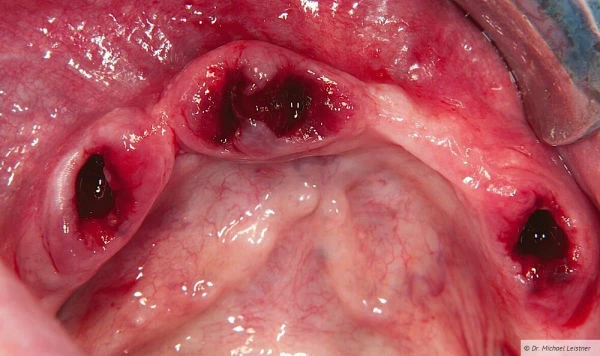
7-View after removal of the bridge (in one piece).
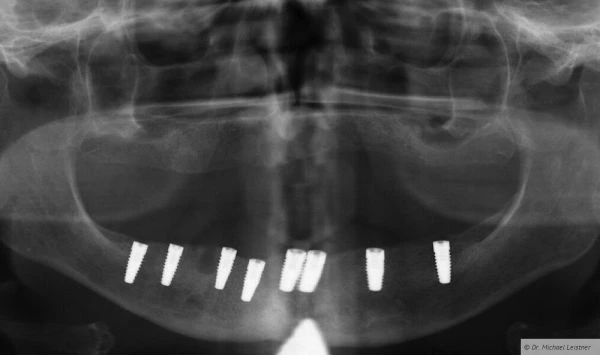
8-Control radiograph after implantation.
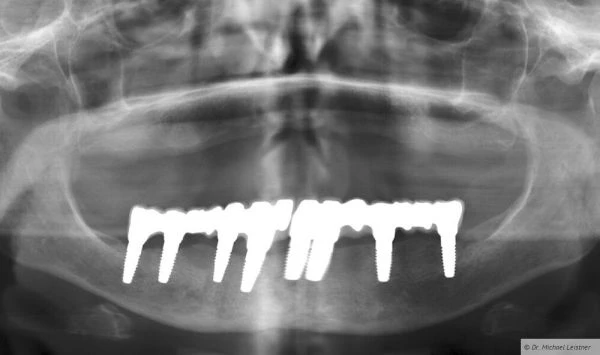
9-Control image after incorporation of the superstructure.
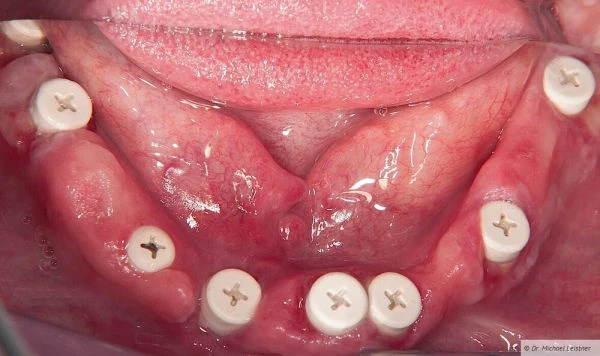
10-After healed exposure of the implants with healing caps and gingiva formers.
11-Interim restoration with soft-lined full denture (for three months).
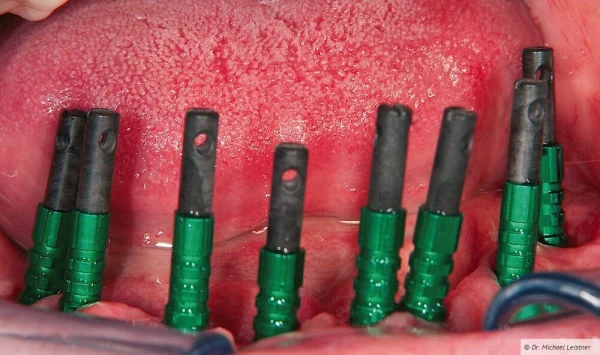
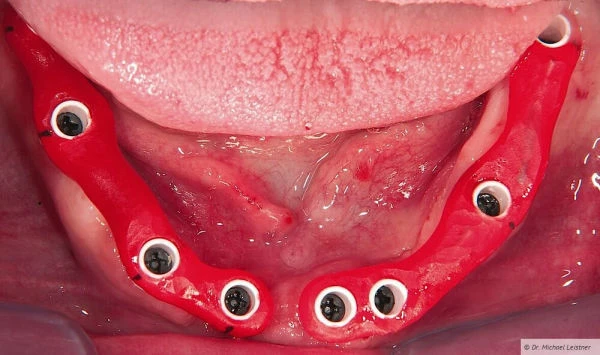
12-Open transfer sleeves before impression in situ with open tray technique.
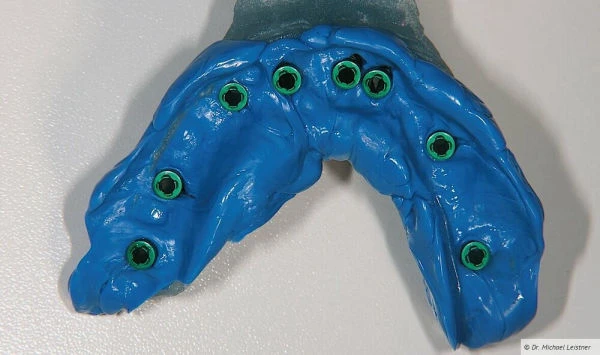
13-After impression gingival view of the open transfer sleeve.
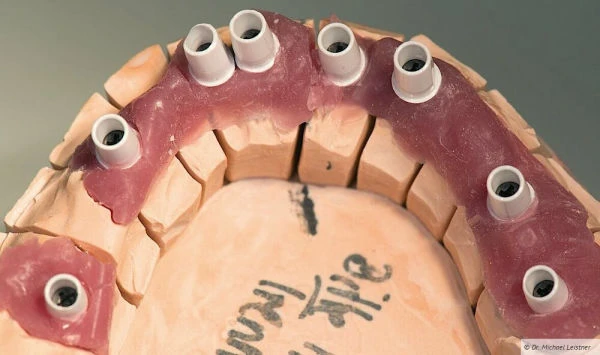
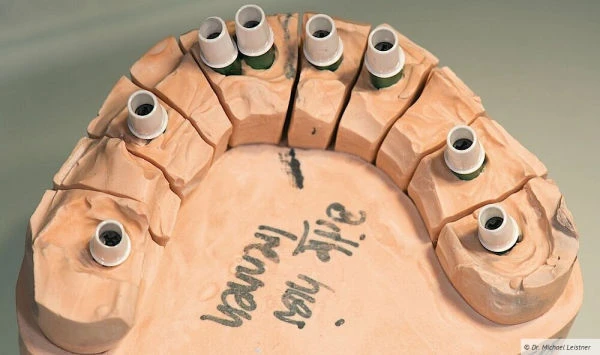
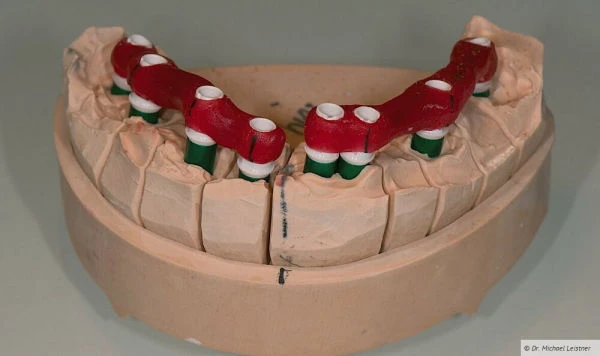
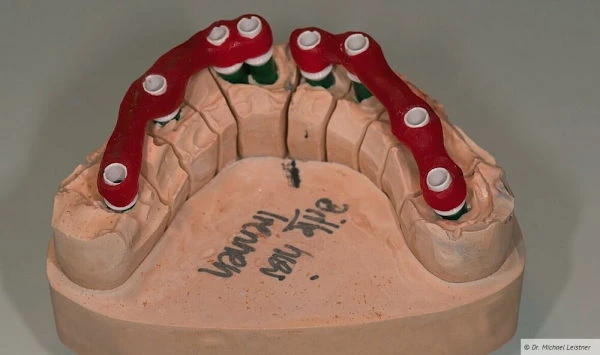
14-Screw-on abutments on the lab analogues with Vicarbo screw - with gingival mask.
15- Screw-on abutments on the laboratory analogues - without gingival mask..
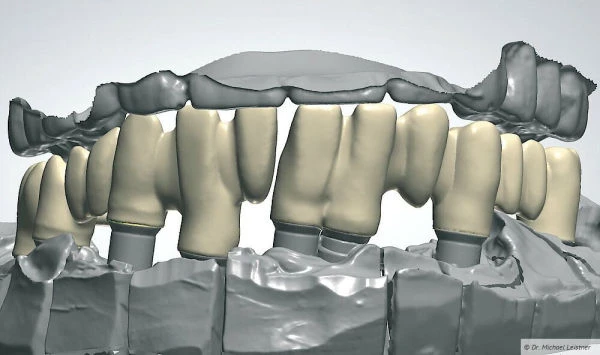
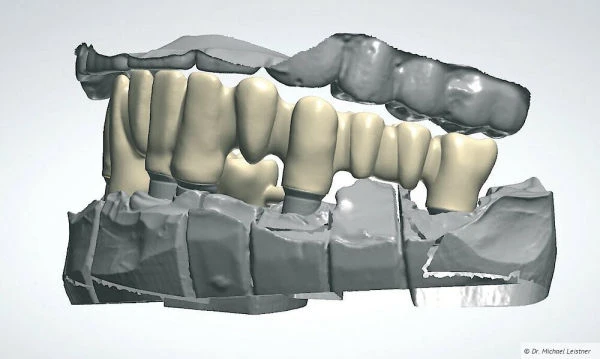
16-: Zirconia frameworks generated after model production CAD / CAM - labial view.
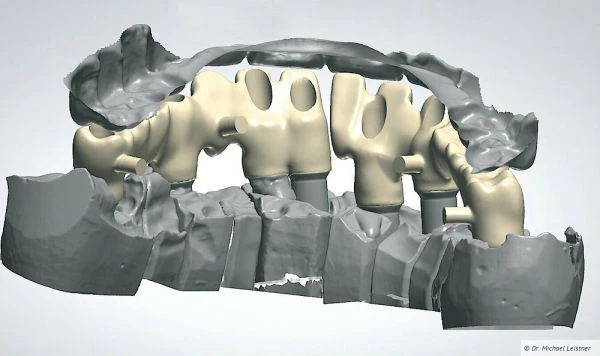
17-: Zirconia framework generated after model production CAD / CAM - lingual view.
18- Zirconia frameworks generated after model production CAD / CAM - side view.
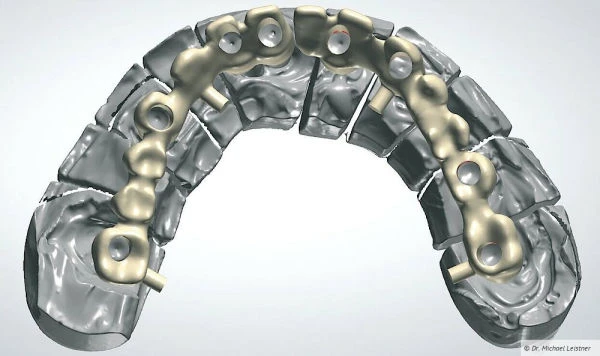
19-Zirconia frameworks generated after model production CAD / CAM - occlusal view.
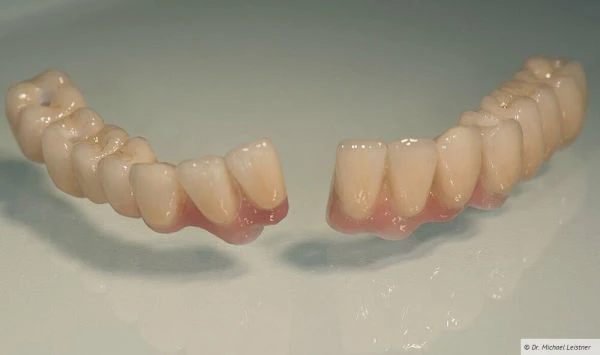
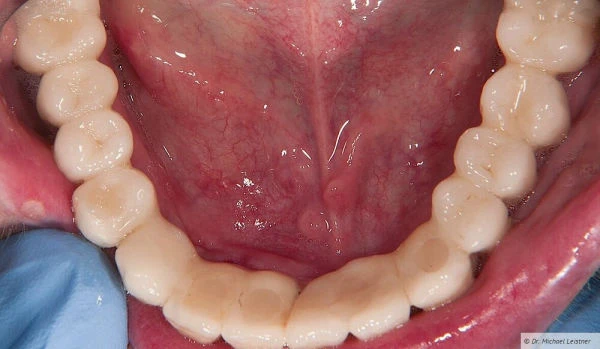
20- The completed bridges.
21-The completed bridges on the model without gingival mask.
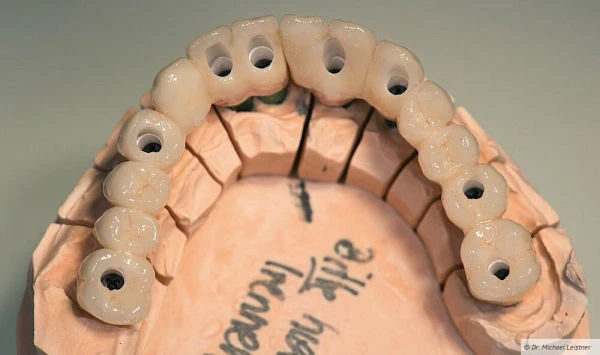
22-The completed bridges on the model without gum mask of occlusal with open screw access.
23-Labial view of the completed bridges on the model  - without gingival mask.
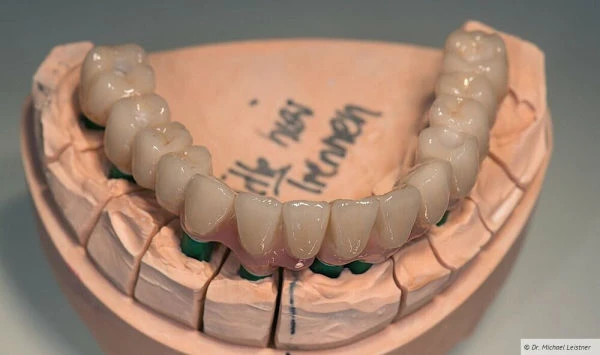
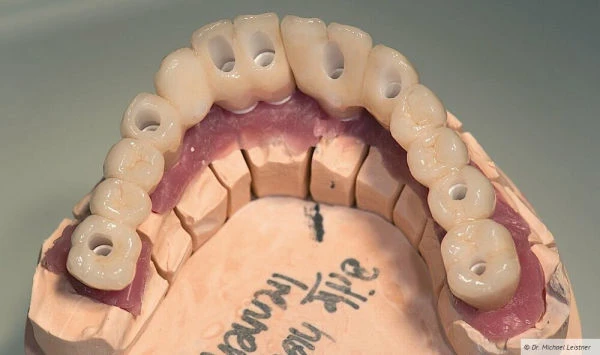
24-Occlusal view of the completed bridges on the model -  with gingival mask.
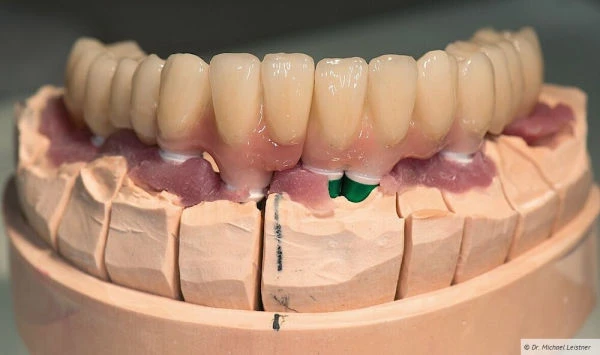
25-Labial view of the completed bridges on the model -  with gingival mask. 
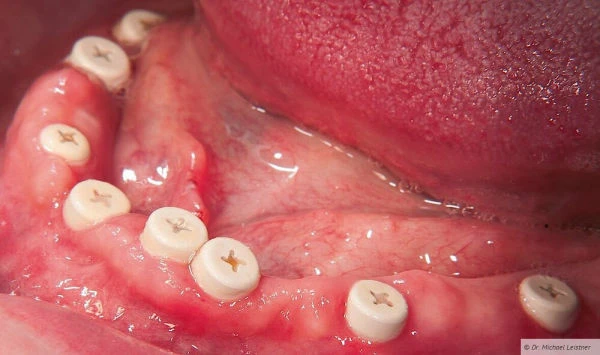
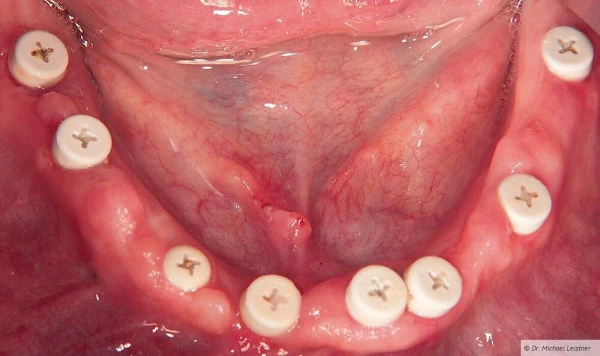
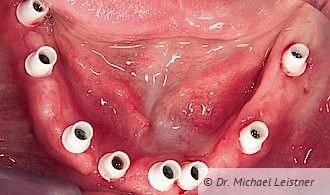
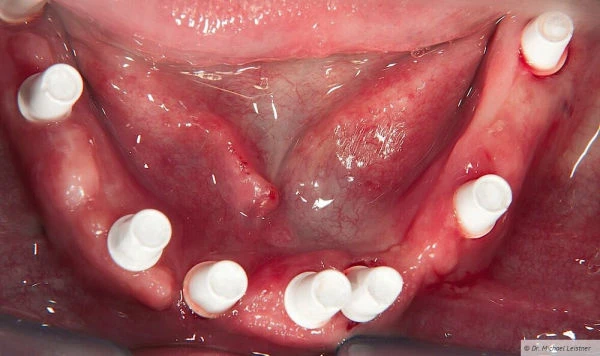
26-Gingival situation before incorporation of the bridges.
27-Occlusal view - Gingival situation before incorporation of the bridges.
28-Insertion key for easier positioning of the abutments on the model.
29-Insertion key for easier positioning of the lingual abutments.
30-Insertion key for easier positioning of the abutments in the mouth.
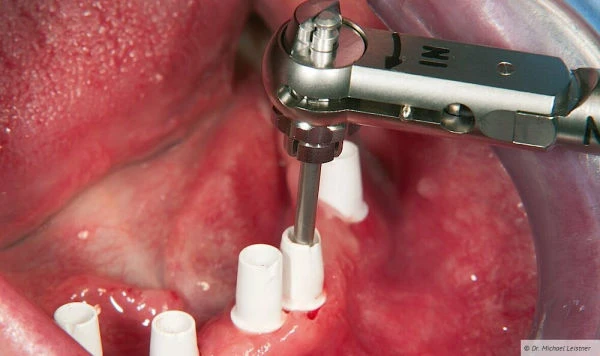
31-Abutments with slightly tightened Vicarbo screws - Recommended torque 5 Ncm.
32- Checking the fit of the two bridges on the abutments - without cement.
33- The bridges are then removed.
34- Final tightening of the screws with ratchet (min. 20 Ncm - max. 25 Ncm ).
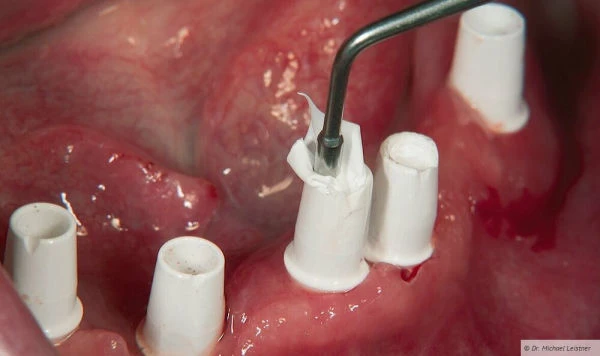
35- Obturating the screw access opening with Teflon tape.
36- View of abutments prior to cementation of the bridges on the abutments.
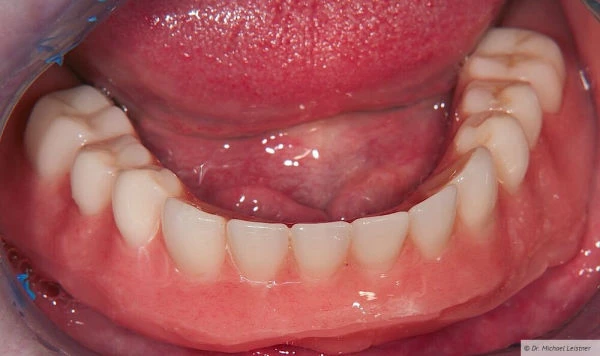
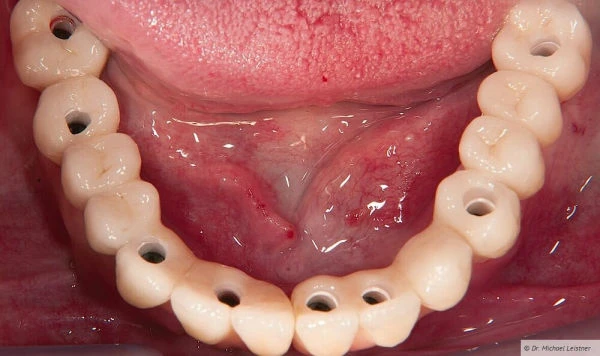
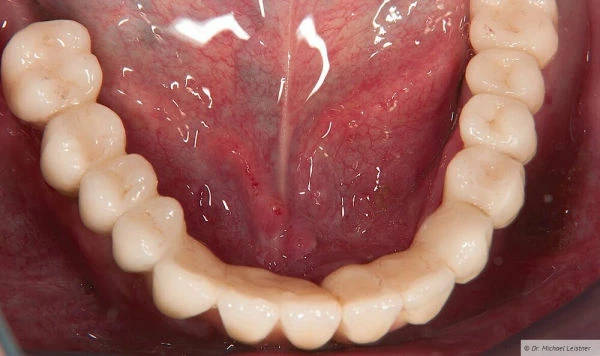
37- Occlusal view of bridge after cementation. Screw access closed with composite.
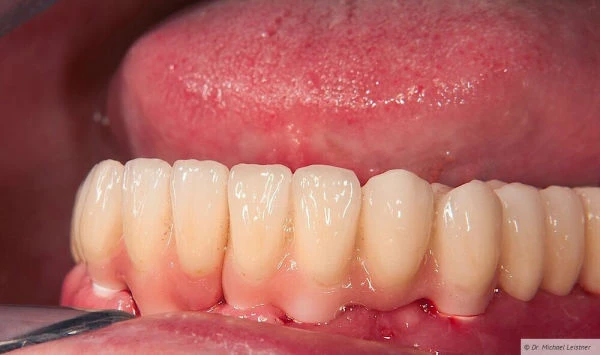
38-View of the bridges from the left after cleaning of adhesive residues.
39- Right side view.
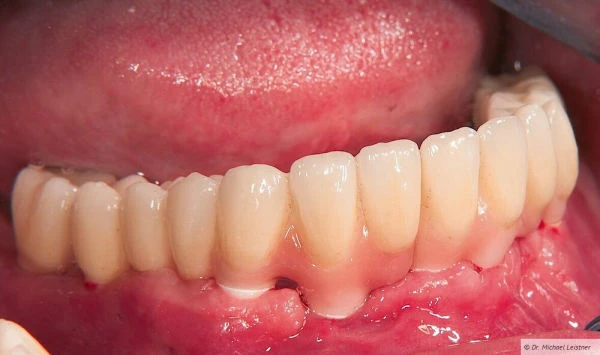
40- Labial view.
41-Another occlusal view.
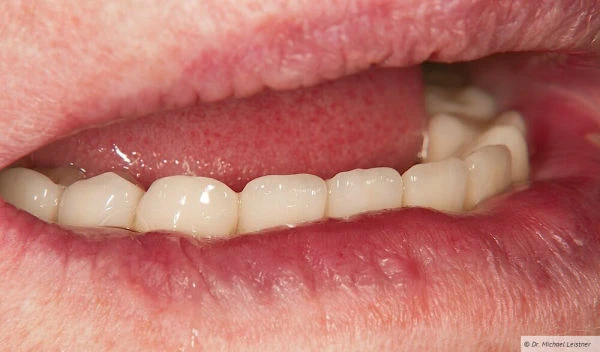
42- Final lip view.