build your own site

CLINICAL CASES - E

ZERAMEX® P6 | Two-Piece Ceramic Implants for Fixed
Metal Free Full Mouth Teeth Replacement

Courtesy Dr. Sammy Noumbissi DDS,MS |      [email protected]       |       www.iaoci.com
( click on the title above to access the published article in a new window)

• Dental implants have revolutionized dentistry and most  particularly fixed and removable prosthodontics. Although  the success of titanium is undisputable, the widespread use  of implants has come with problems ranging from cosmetic  concerns to the systemic effects on the recipient. There has been  increasing reports and research on the long-term stability of  titanium and titanium alloys in the body and in the last twenty  years in the oral environment. The breakdown of metals  and Titanium alloys have been increasingly scrutinized as  studies have repeatedly proven that over time during exposure  to the oral environment and/or body fluids, titanium  particles are found in peri-implant tissues, lymphatics and  even distant organs. In recent years, titanium and titanium alloy implant corrosion has been identified and proven to  be the mechanism by which release of metal ions from the  implants to peri-implant tissues occurs. Most recently in clinical reports, immunological research have put into question the widely accepted biocompatibility of titanium and titanium alloy implants. As a matter of fact, the search for alternatives  started in the seventies with pioneers such as Prof. Sami Sandhaus. The clinical situation presented here is one where  metal sensitivity was a concern and although the patient never experienced dental implants in the past, there was concern on his part in having metal alloy implants in his jaws. This is  an increasing trend among patients requesting alternative and  non-invasive treatment modalities in all areas of health care.
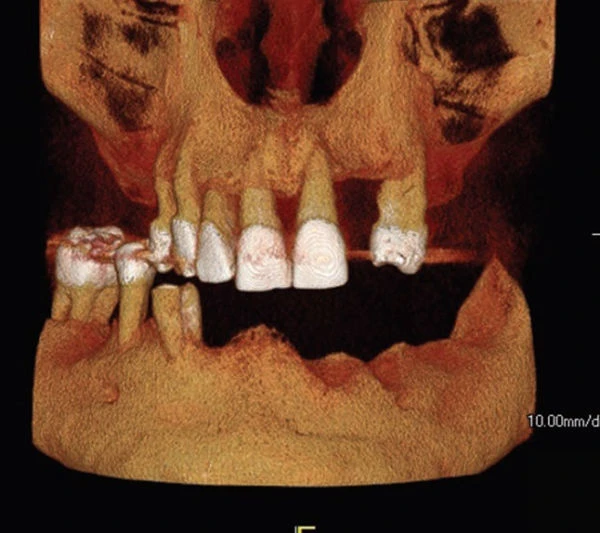

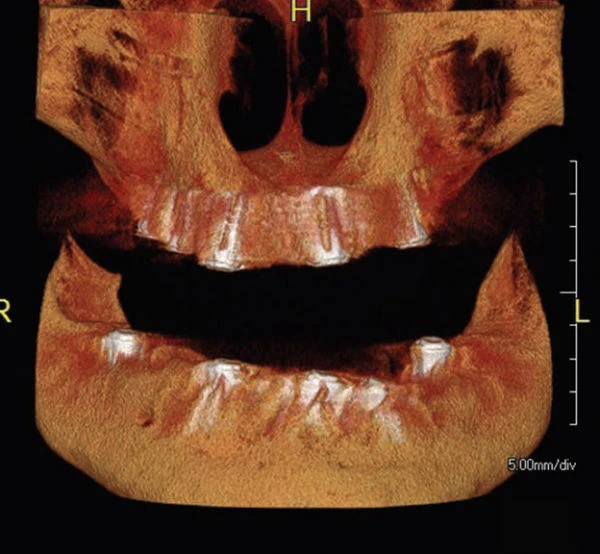
1- CBCT 3D reconstruction - Before treatment.
2- CBCT - 3D reconstruction after Zeramex P6 placement.
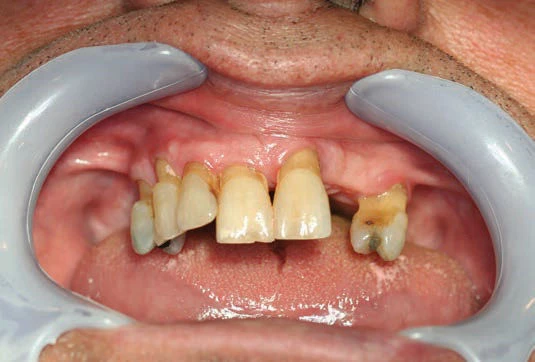
3-The periodontally involved teeth had mobility type II with
moderate to advanced bone loss in most cases and gingival
recession.
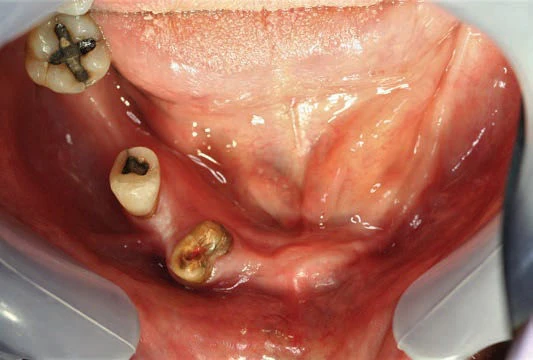
4- Only three mandibular teeth were
present with no teeth remaining in the mandibular
left quadrant and moderate to advanced vertical bone loss.
A cone beam CT scan was obtained and reviewed to assess
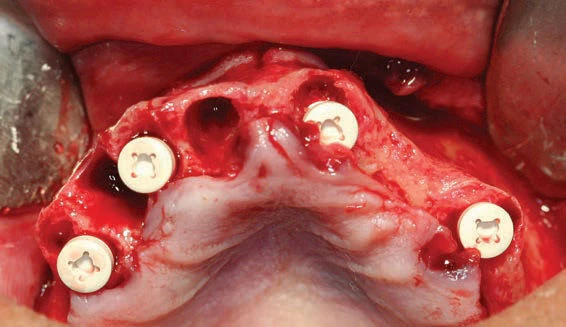
5-Five two-piece ceramic implants were placed in the
maxilla as well as in the mandible. The manufacturer surgical
kit and protocol was closely followed. Insertion torque value
for all implants was 25 Ncm and all implants showed good
initial clinical primary stability using the Ostell device.
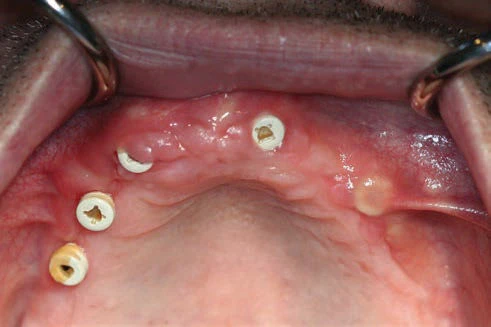
6-Four months post-surgery the implants were uncovered by
removing the soft tissue above the cover screws using a diode
laser where needed
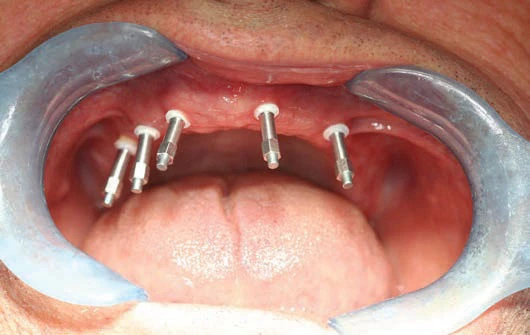
7-The smartpegs specifically
designed for the P6 implants were once again screwed into the
implants and stability measurements were made.
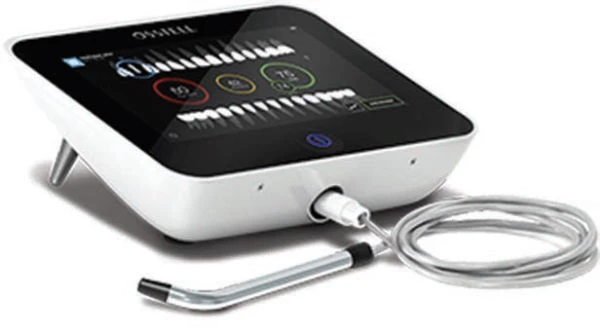
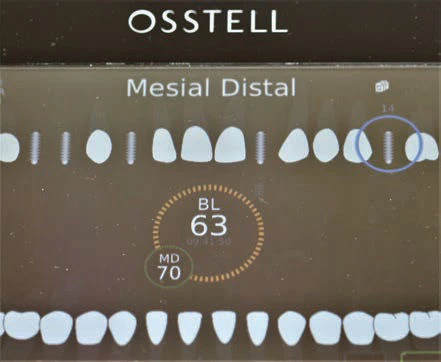
9-The Ostell
device  was used to measure the implant stability level for each implant after four months of
healing time.
9-Ostell Implant Stability Quotient
Values (ISQ)
10-The fabrication of a hybrid prosthesis was started
by going through the process of making a conventional
denture. Wax rims, wax try-in were done for space analysis,
facial contour occlusion, phonetics and aesthetics
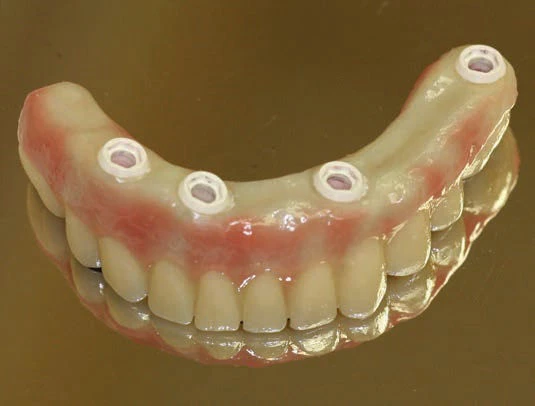
11- The frameworks were returned
to the laboratory so that an overlay of pressed ceramic could
be fabricated and the prosthesis finalized. View of the abutment connection
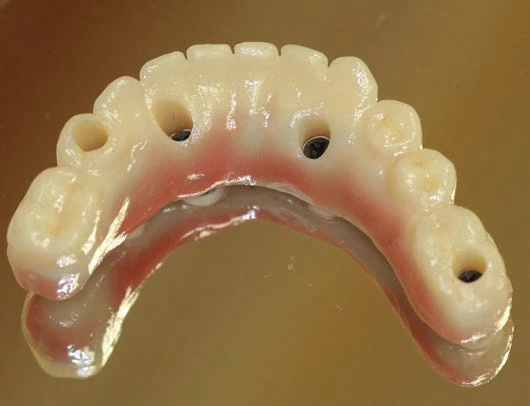
12-Occlusal view with the holes for the Vicarbo screw.
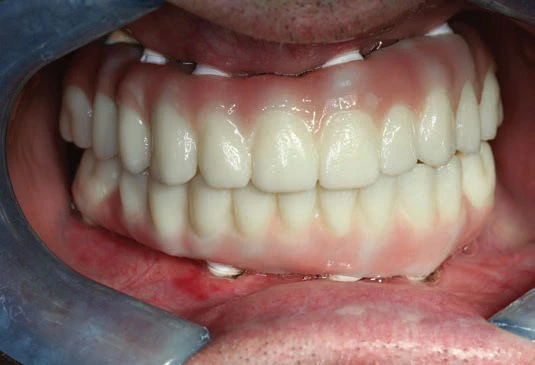
13-The  Vicarbo screw-retained all-ceramic porcelain fused to zirconia
bridge  was connected to the implants; occlusion
checked and adjusted where needed.
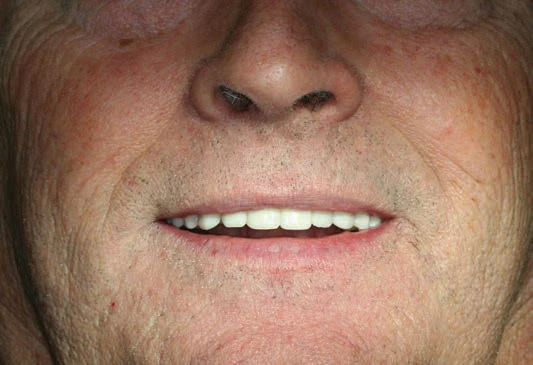
14- The patient was satisfied
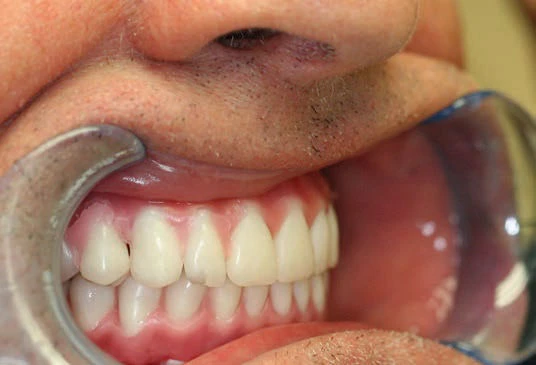
with the aesthetics of the prostheses.
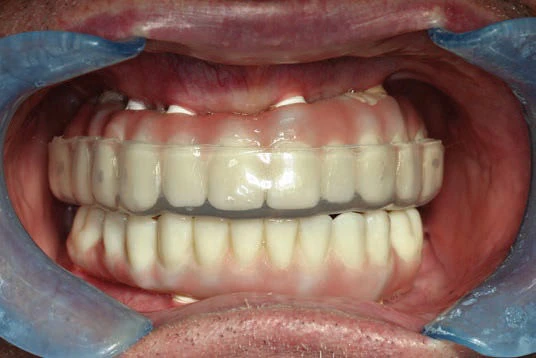
15-A soft night guard was provided to the patient . The patient
has been followed up periodically for the last twenty-four
months and there have been no complications to date.